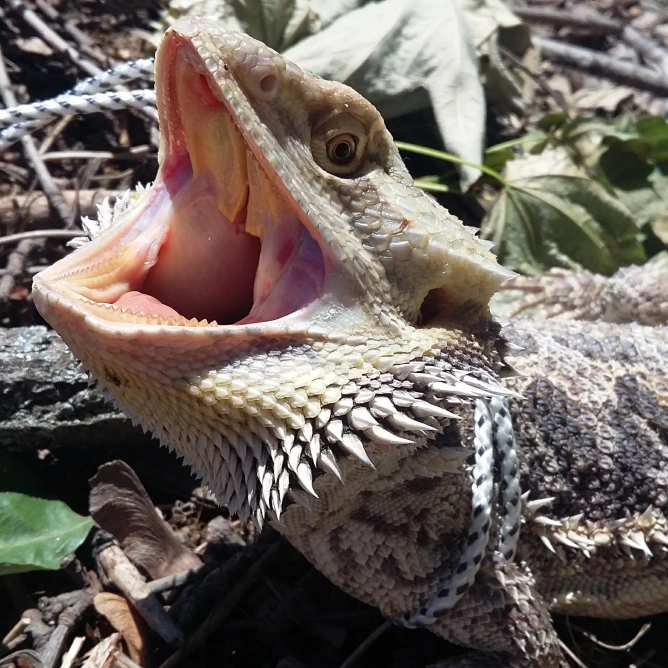
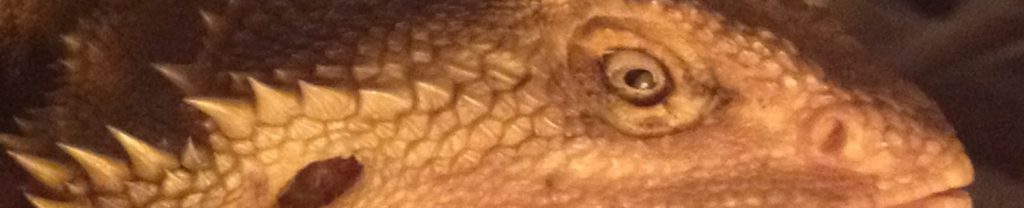
Many of our reptilian friends appreciate and need a little warm-water time.

Desert dwellers need water, too!
It’s easy to assume that a bearded dragon or another desert-dwelling reptile gets all the moisture it needs from its food. While diet does contribute to hydration, it isn’t always enough. Captive reptiles can become dehydrated, even when their humans are doing their best.
Some reptiles also don’t seem to recognize still water in a dish as a drinking opportunity. Bearded dragons are a good example. They may walk right past a perfectly good water bowl without giving it a second glance.
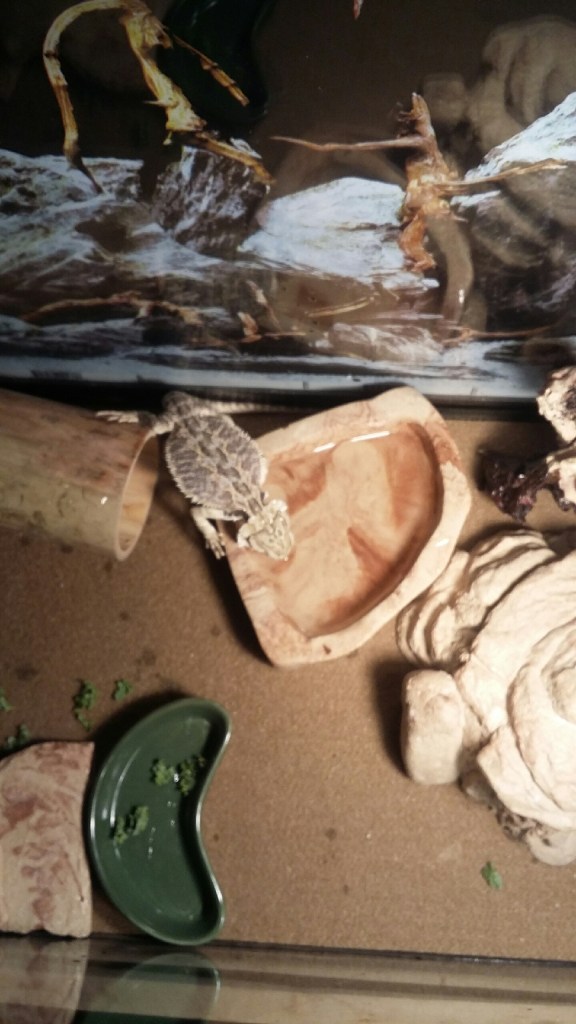
Before someone begged me to take Lil’ Murph to give him a good life, I visited him once in a while. He was the baby lizard of a teenager who didn’t do proper research on care. As you can see, he was so thirsty, his cage was messy, the food was dried, he was too far from his heat sources, and was receiving no UVB light. One day, I showed Murph there was water in his dish by wetting my finger and dripping it onto his lips. When he saw the water dripping back down into the bowl, he realized there was water in it. He leaned over and drank for such a long time! I shortly thereafter agreed to keep him and he quickly won my heart.
Some smaller lizards, including anoles and true chameleons, commonly drink droplets of water from leaves and other surfaces rather than drinking from a standing bowl. Moving droplets, gentle misting, or a suitable drip system can help provide drinking opportunities.
Keep fresh, clean water available regardless. Just because your lizard doesn’t appear to use the water dish doesn’t mean it should be removed.
A little warm-water soaking goes a long way
Offering a supervised soak can be a helpful part of reptile care. It provides an opportunity for hydration, can help soften retained shed, and gives your little friend a chance to enjoy a change of scenery.
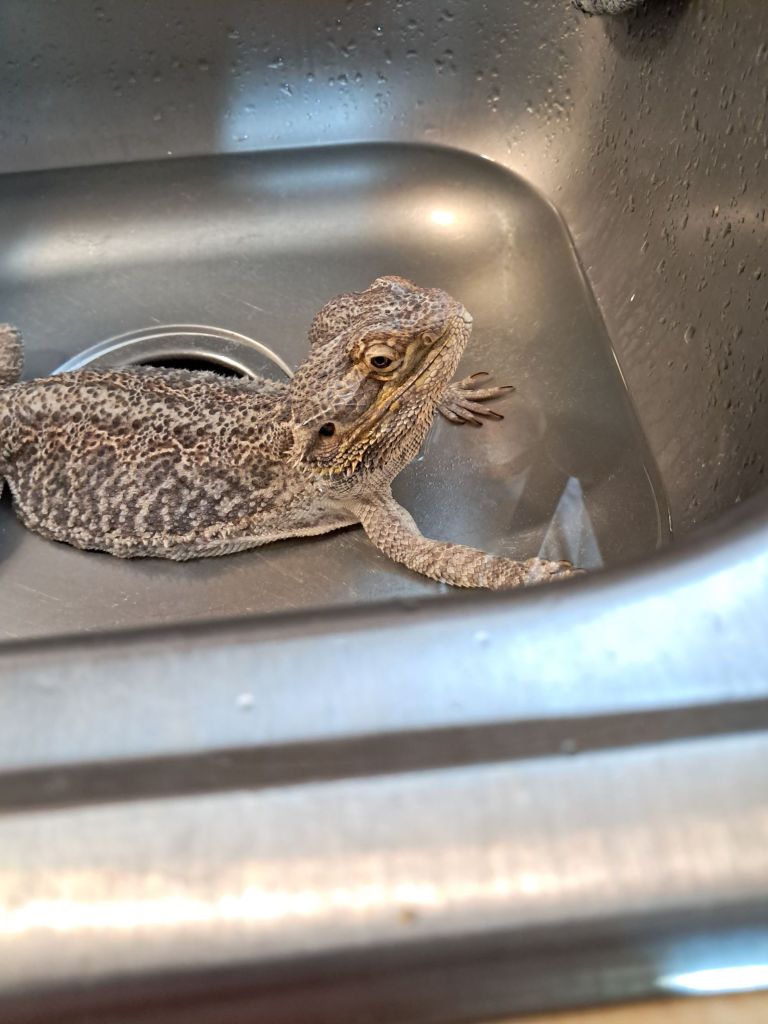
And yes, even desert reptiles can enjoy a good soak!
For many commonly kept lizards, a few short soaks per week may be appropriate, but frequency depends on the species, age, health, and individual needs. Bearded dragons, for example, are often offered a weekly warm soak; some reptile veterinarians recommend more frequent soaks depending on the animal.
Don’t assume that one schedule works for every reptile. Snakes, turtles, geckos, and other lizards have different requirements, so check species-specific husbandry guidance and ask an experienced exotic-animal veterinarian when in doubt.
How to make spa time safe
A few important things:
- Use comfortably warm, never hot, water. Reptiles depend on their surroundings to regulate body temperature, so water that’s too hot or too cold can be harmful. YOUR INNER WRIST IS THE BEST PLACE TO TEST THE WATER TEMPERATURE. WATER COOLS QUICKLY, SO IT WILL PROBABLY NEED DRAINED AND REPLACED AT LEAST ONCE DURING THE SOAKING – DEPENDING ON THE ROOM’S TEMPERATURE AND HOW QUICKLY THE MATERIAL OF THE SINK, ETC. COOLS. 85 – 95% CAN BE A GOOD TEMP RANGE FOR THE WATER, AND YOU MAY USE A THERMOMETER. A TEMPERATURE GUN DETECTS ONLY THE SURFACE’S TEMP. IT’S IMPORTANT TO NOTICE HOW COOL OR WARM YOUR LIZARD IS AND BE WISE ABOUT NOT CREATING A DRASTIC TEMPERATURE CHANGE TO THE SKIN/SCALES IN THAT FIRST BATCH OF WATER.
- Keep it shallow. Your reptile must be able to keep its head above water without struggling. Never put an animal in water deep enough to risk drowning.
- Stay with them the entire time. Not nearby, not in the next room, and definitely not while scrolling through your phone. A reptile can get into trouble surprisingly quickly.
- Keep the soak short. Around 10 minutes is adequate for many reptiles, although species-specific instructions may differ. Sometimes your lizard may simply not want to soak, this can be exceptionally so if they are scared about it at first or if the water temperature is not good. Sometimes, a lizard may want to soak longer. This can happen, but of course, eventually too much time in the water is simply too much time and is no longer beneficial at all.
- Use plain water only. No soaps, shampoos, bubbles, or other bathing products.
- Watch your reptile’s behavior. If it seems distressed or is struggling, end the soak. Never force an animal to remain in water.

Murph often appreciated a tiny rolled up rag as a “bath pillow” (chin prop). This helped him to completely relax and keep his ears and nostrils elevated from the water, but sometimes he moved it around and it unfolded. He had his own little bath towel that hung on the wall. And he loved to be wrapped it in and held after spa time. I loved the cuddle time as well. As varied as Lil’ Murph’s diet was, and despite that he had “spa time” every week, once in a while he would lower his lips into the water and gulp.
A shallow, clean container works nicely for a reptile’s soaking. Just make sure it is secure, comfortable, easy to dump and add warm water to again as needed, and is appropriate for your reptile’s size. My lizards have soaked in the double-basin style kitchen sink. If this makes you cringe, please read on. This spot is also incredibly easy to drain, refill, and test water temp on the side they’re not in before replacing their cooled water with more warm water.
💩During your lizard’s soak, if you see a poo happening, you can slightly slip your hand beneath your lizard to keep their upper portion clean. This is just another reason why keeping your eyes on your lizard the entire time is important. Post-poo, you may hold your lizard under running water of the same pleasantly warm temperature – not the face, of course. You can then gently wipe down the vent area and elsewhere with your hand or soft cloth a few times under the running water. You don’t need to hold them completely vertically as you do this. Go ahead and wash their bath towel after this particular bath.😁
When you believe that enough water has rinsed everything away, go ahead and speak to your darling as you hold him or her, place them in their enclosure and sanitize every inch of the sinks, faucet, handles, and surrounding counter space, as contaminated water may have splattered. I prefer to use bleach for this. I use a mixture of bleach and water from a spray bottle. I read that 4 teaspoons of bleach per 1 quart of water is sufficient to kill the salmonella that is in reptile poo, but honestly, I make my concoction with more bleach than that.
Isopropyl alcohol will kill salmonella as well. I use this when poo has happened on carpets so that I don’t discolor them. If you sanitize hard surfaces this way, try to keep the area wet with the alcohol for up to 30 seconds. Note that 91% alcohol will evaporate quicker than 70%, but both do the job. I’ve had two bearded dragons who enjoyed the kitchen sink for spa time for nearly an accumulative 16 years, and no one has ever been contaminated with salmonella, as disinfecting thoroughly and properly is key – and also not having dishes nearby.
Proper humidity in an enclosure is important for skin health and hydration, but desert-dwelling lizards are not designed for high humidity. Hydration and humidity aren’t the same here. Thermostat and hygrometer combos are inexpensive and some stick well to the inside if the glass, although high humidity can affect how well some of them stay put.
One can’t place a mister or other form of gadget in an enclosure to make a humid environment thinking they’ll never have to give their reptiles occasional soaking time. This is dangerous for the native desert-dwelling reptile’s respiratory system, and may very well cause infections, stress, and death. Soaking doesn’t take long and isn’t a daily event. Use this time to let your lizard know it’s loved, and make it your 10 minutes or so to relax and enjoy your companion. To learn more about hydration and how interesting reptile skin and scales are and what it does, see: Some Lizards Don’t Drink Water (exactly)
❤️🦎❤️🐍❤️🐢❤️
A soak is not a substitute for proper drinking water, correct enclosure temperatures, appropriate humidity, or a balanced diet. And if your reptile shows signs of dehydration, such as sunken eyes, lethargy, poor shedding, or unusual weakness, contact a reptile-savvy veterinarian rather than relying on bathing to solve the problem.
Our little scaly companions depend on us to notice the things they cannot tell us. They may not be able to say, “Excuse me, I’m a little thirsty,” but we can learn their habits, recognize their needs, and give them the care they deserve.
So, when it’s appropriate for your reptile, offer a little warm-water spa time. You might even discover that your supposedly tough desert dweller is a bit of a bathtub enthusiast!
“Give me lizardry or give me death!” ❤️Lil’ Murph (always) & Dawn


Leave a Reply